Creality Sermoon D1 Reviews: See Why 0 Shoppers Rated It 0 Stars!
Everyone’s got opinions. We collected 0 of them to see if the Creality Sermoon D1 3d printer really earns that 0/5 rating.
 Supermod
 Moderator
 Recaptor
Comprehensive Review of the Creality Sermoon D1 3D Printer
When diving into the world of consumer 3D printing, the Creality Sermoon D1 emerges as a notable option tailored largely for beginners and hobbyists. Launched in 2021, this FDM/FFF printer stakes its claim by offering a solid build volume, straightforward assembly, and a consumer-focused design that balances usability with enough features to satisfy entry-level prototypers and miniature creators. On paper, its specs suggest it delivers a reliable printing experience without overwhelming new users, but does it really live up to its numbers in a competitive market? Let's examine the details grounded in verified specifications and features to provide an informed perspective.
Detailed Specs & Features
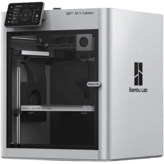
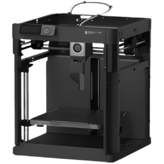
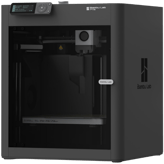
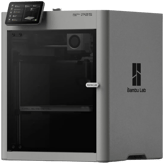
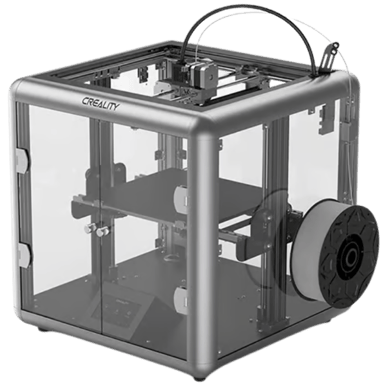
The Sermoon D1 asserts an inviting profile thanks to its compact footprint, measuring 19.69 inches in width, depth, and a height of just under 21 inches, making it suitable for desktop setups that require minimal space (dimensions & weight). The printer is fully assembled, a huge advantage for beginners, eliminating setup frustrations often associated with kit-type machines.
Under the hood, it features an internal power supply compatible with a broad voltage range (100-240 Volt), which enhances usability worldwide and adheres to standard electrical safety certifications like CE, FCC, and RoHS (power-supply-voltage, safety-certifications). This printer's build volume stands at an appreciable 11.02 x 10.24 x 12.2 inches, resulting in a 13993 cubic centimeters space for creative freedom in printing relatively large models for its class (build-volume). Layer resolution ranges from 100 to 400 microns, offering decent print detail while accommodating faster draft prints when needed (layer-resolution-minimum).
Notably, the standard 0.4 mm nozzle supports quick swaps with alternatives up to 1.2 mm, allowing users to optimize between detail and speed with ease (quick-swap-nozzles). Material compatibility is another highlight; it supports popular filaments like PLA, ABS, and TPU with a 1.75 mm filament diameter, granting users versatility in project choices. However, it does require filament drying beforehand, a consideration for those working in humid environments (supported-filament-types). The printer does not support multi-material or resin printing, aligning it squarely with the FDM community.
User Experience & Performance Based on Specs
Design & Build
The Sermoon D1's closed Cartesian frame design provides stable structural control during printing and enhances temperature retention for better print quality, especially with ABS filament (frame-type). Featuring a glass build plate with a smooth surface, users benefit from enhanced adhesion and easier model removal after printing (build-plate-type). Despite lacking automatic bed leveling, the semi-automatic first-layer calibration combined with manual bed leveling options still empowers users to fine-tune their setup for consistent results (first-layer-calibration). The presence of a filament runout sensor ensures print continuity by alerting users to reload filament; a simple but much-appreciated feature that reduces costly failed prints (filament-runout-sensor).
Performance
In daily use, the stated effective print speed of 80 mm/s, alongside a maximum of 150 mm/s, positions the Sermoon D1 as a competent machine for routine prototyping and hobby projects (measured-effective-print-speed). The print accuracy of 100 microns is respectable for consumer-grade printers, delivering fine details without sacrificing speed too heavily. Performance metrics like a 90% print success rate and a continuous print time of 200 minutes further underscore its consistency and dependability (print-success-rate).
Although it lacks advanced spaghetti or fault detection tech, the inclusion of print recovery functionality is crucial for handling mid-print power interruptions (print-recovery). Noise levels measured at 50 dB during operation are moderate, allowing for home or office use without excessive disturbance (operating-noise-level).
Camera / Display / Audio Quality
While the Sermoon D1 does not sport a built-in camera, it compensates with a responsive 4.3-inch touchscreen display that operates at 480x320 pixels resolution (screen-size). This interface promotes an intuitive user experience for navigating print settings without additional software. Notably, no cloud software or remote monitoring is available, which simplifies operation but may limit advanced remote management desires (connectivity options).
Extra Features
The printer's enclosed build chamber includes white lighting for better print visibility, enhancing the user's ability to monitor prints accurately (lighting-inside-chamber). Its safety profile is commendable, with overheat protection and auto shutdown on errors, responding proactively to potential hazards (overheat-protection). However, it lacks an emergency stop button or enclosure lock, which means users should stay vigilant during operations (emergency-stop-button).
Pros & Cons
Pros
- Fully assembled out-of-the-box design simplifies setup
- Large build volume with versatile material support (PLA, ABS, TPU)
- Reliable safety features, including overheat protection and auto shutdown
Cons
- No automatic bed leveling or filament auto-loading, demanding more manual attention
- Lacks remote monitoring and advanced software features
Price & Value for Money
Priced at $755 at Creality Store, this printer falls within the affordable range for beginners seeking sizable build capacity and essential features. Given its 1-year warranty period and extensive safety certifications, the price feels justified considering the level of engineering quality and consumer safeguards integrated (warranty-period). Users on a budget who prioritize ease of use and basic functional reliability will find good value here, while those requiring high-end remote management or multi-material advanced printing might want to explore more expensive alternatives.
Quick Take
In short, the Creality Sermoon D1 offers a balanced package suitable for entry-level 3D printing enthusiasts. Its strengths lie in straightforward usability and steady, quality prints within a comfortable volume. If we look at the numbers alone, it presents thoughtful, beginner-friendly specs without unnecessary complexity.
Closing Recommendation
The Creality Sermoon D1 may be ideal for users just starting in 3D printing or those focused on prototyping and miniatures who value convenience and transparency in machine operation. It appears to perform best for applications that prioritize reliable print quality over speed or high-end software integrations. Ultimately, it helps users achieve consistent results with minimal setup hassle, backed by credible safety features and certified workmanship.
Verdict
Rating: Based on the specifications and overall feature set, we believe Creality Sermoon D1 deserves 4.1 out of 5.
- Winner Feature => Its fully assembled, designed, and combined with a large build volume, making it highly accessible for beginners.
- Needs Improvement => Lack of automated bed leveling and advanced connectivity limits seamless operation and remote use.
Reviews 0
The good, the bad, and the brutally honest.Average Rating


More 3D Printers 453
Unlock more awesome finds.